
Storm Damage Roof Replacement in Brea: A Homeowner's Guide
After a major storm, Brea homeowners face the same sequence: assess, document, protect, claim, replace. Here is how to handle each step correctly.
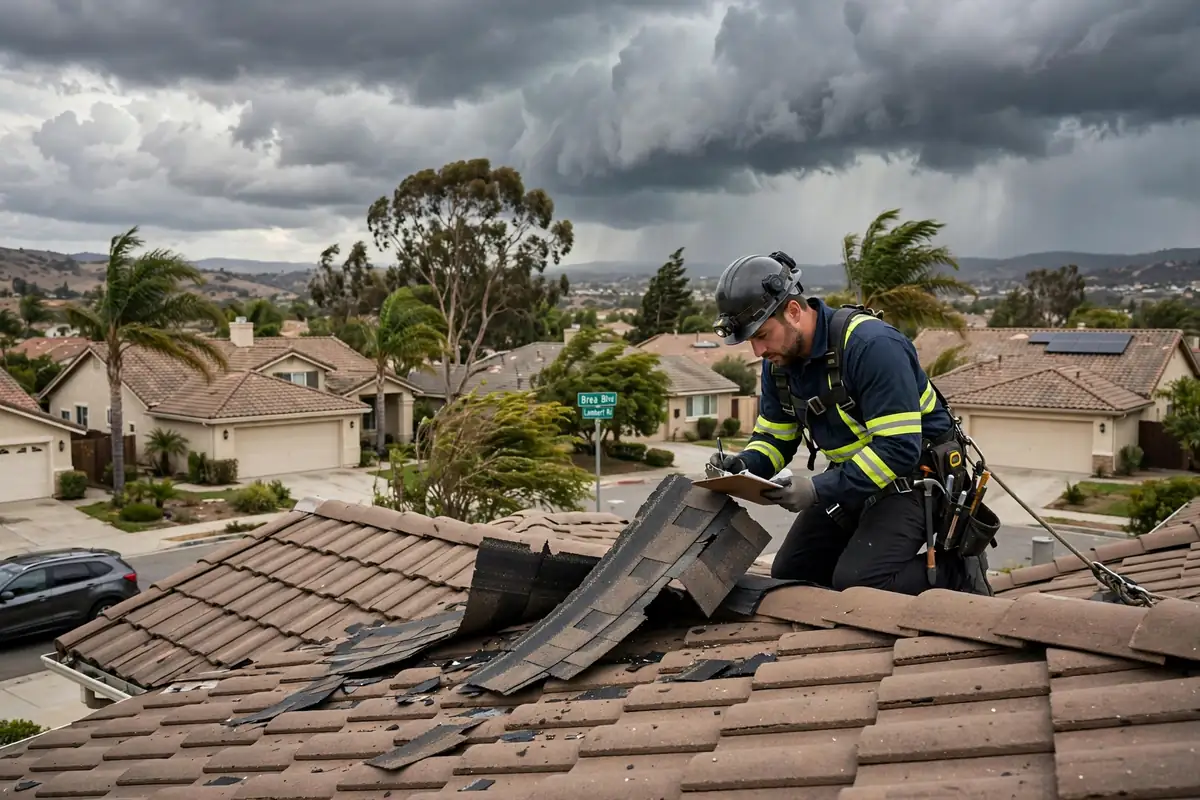
First 24 hours: safety and temporary protection
Stay off the roof. Photograph visible damage from the ground. If water is entering, call for emergency tarping — most policies require you to mitigate further damage, and emergency dry-in is typically covered.
Days 1-7: professional damage assessment
A proper storm assessment documents every slope with photos, counts hail impacts per square, maps wind-lifted shingles, and records collateral damage. This documentation is the foundation of your claim — get it before the adjuster, not after.
Filing and the adjuster inspection
File with your documentation ready, then have your contractor present at the adjuster meeting. Adjusters respect thorough evidence; the walkthrough is where scope gets set correctly.
Replacement with upgrades
Storm replacements are the ideal time to upgrade: impact-resistant shingles (which can reduce premiums), improved ventilation, and full ice-and-water shield. Your deductible stays the same while the roof gets better.
Watch for storm chasers
After every major storm, out-of-area contractors flood in. Verify CA licensing, local references, and a physical local presence. Never sign over your insurance benefits or pay the full deductible to a stranger at your door.
Related Services
Areas We Serve
More Guides
How Much Does Roof Replacement Cost in Brea?
Guide from Roof Replacement Specialists.
7 Signs Your Brea Home Needs a Roof Replacement
Guide from Roof Replacement Specialists.
The 48-hour storm checklist
After any Santa Ana wind event: walk the property and photograph anything on the ground (shingles, tile pieces, ridge caps). Look up from across the street for missing tabs or lifted flashing — binoculars help. Check the attic for new stains. Then call for the free inspection before the next rain: wind damage documented within days is a clean repair or clean claim; the same damage after three storms is deck rot.
Why wind damage hides until the rain
Creased shingle tabs look almost normal from the ground — the crease is a fracture line that the next gust completes. Lifted flashing reseats in calm weather and lifts again under pressure. The roof can look 'fine' for weeks while every lifted edge waits for wind-driven rain to exploit it. This is why post-storm inspections matter more than post-rain ones: find it in the calm, fix it before the storm.
The 72-hour action plan
Hour 0–24: safety first — stay off the roof, photograph damage from the ground, and call for emergency dry-in if water is entering. Day 1–2: our free inspection documents everything with dated photos and lift tests; file the claim with the carrier. Day 3: the adjuster visit is scheduled and we confirm we will attend. Acting in this order — document, protect, file — puts you in the strongest position for the weeks that follow.
Working with your insurance: the order of operations
Document first (your photos, our inspection), protect second (emergency dry-in if water enters), file third. This order matters: the claim filed with complete documentation moves faster and settles fairer than the claim filed in a panic with no evidence. We attend the adjuster meeting with the damage map; most Brea storm claims resolve in six to ten weeks from filing to finished roof.
Frequently Asked Questions
My neighbors are getting new roofs. Does that mean I qualify?
It is a strong signal your area took a hit, but every roof weathers storms differently based on age, material, and exposure. Get your own documented inspection — it takes 30 minutes.
How long after a storm can I file?
Most policies require prompt notice. Practically, file within weeks, not months. Evidence degrades and carriers question delays.
Should I tarp it myself after a storm?
Only as a stopgap, and carefully — walking a damaged roof risks injury and more damage, and a poorly secured tarp becomes a sail that tears off more roofing. If water is entering, call us: emergency dry-in is same-day and installed without damaging the surrounding roof. Your safety is worth more than the service call.
How do I prove the damage was from this storm?
Dated photos taken within days of the event, the National Weather Service storm record for the date, and our inspection report with lift-test evidence. Together they form a timeline no adjuster can reasonably dispute. This is why the 48-hour checklist matters: evidence has a half-life.
Should I let a 'storm chaser' knock on my door?
Be cautious with out-of-area crews that appear after every wind event: no local office, no local references, gone when warranty issues surface. A Brea-based team with a local phone number, local reviews, and years on these streets is accountable in a way a traveling crew cannot be. The cheapest post-storm bid is often the most expensive roof.
Will filing a storm claim raise my premiums?
A single weather-related claim rarely moves premiums the way at-fault claims do — insurers treat widespread storm events as catastrophes, not driver behavior. That said, policies and carriers differ; the honest answer is that the roof damage costs more than the premium risk. We can discuss your specific situation during the inspection, but we are roofers, not insurance advisors.