
Tile Roof Replacement in Brea, CA
In short: In short: this page covers tile roof replacement in Brea, CA 92821 — clay and concrete tile with full underlayment renewal, the waterproofing layer that actually decides a tile roof's life. Tiles last 50+ years; underlayment lasts 20–25. First step: a free inspection that tells you whether you need full replacement or a tile lift-and-relay.
Tile roofs define the look of so many Brea neighborhoods, and a proper tile roof replacement protects that character while delivering a roof that can last half a century. Whether your home has concrete or clay tile, we handle the full replacement: tear-off, underlayment renewal, batten and flashing replacement, and careful installation of new tile matched to your home's original profile.
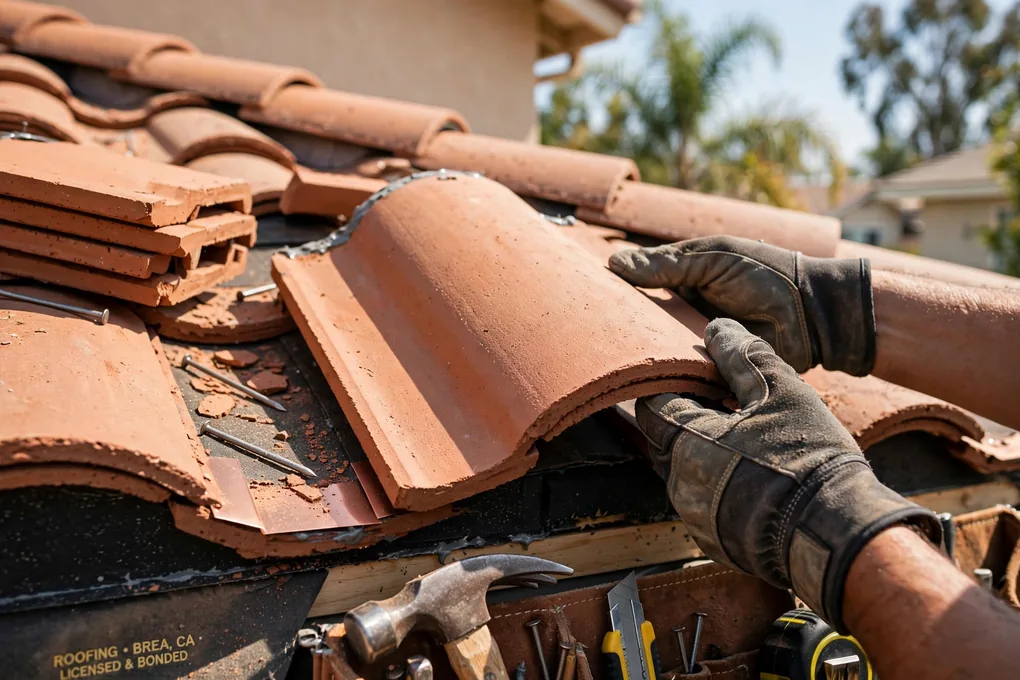
What This Service Includes
On most tile replacements, the tile itself outlives the underlayment beneath it. The critical work is what you cannot see: we strip the old tile (salvaging reusable pieces), replace the waterproofing underlayment, install new battens, flashings, and bird stops, then set the new tile to manufacturer specifications with proper headlap for our wind and rain patterns.
Signs You Need This Service
- Cracked, slipped, or missing tiles
- Leaks despite intact-looking tile (underlayment failure)
- Tile age of 25+ years on the original underlayment
- Deteriorated mortar at ridges and hips
- Sagging areas indicating batten or deck issues
How We Do It Right
We work with concrete tile in flat, S, and Mediterranean profiles and clay tile where the architecture calls for it. Every replacement includes a double-layer high-performance underlayment system, new valley metal, and upgraded ridge ventilation. Tile is heavy — we verify the structure can carry the load, which is rarely an issue on homes originally built for tile but always worth confirming.
Tile Roof Replacement for Brea Homes
Tile suits Brea's architecture and climate beautifully — but intense UV exposure, heat cycling, and Santa Ana winds that test shingle adhesion punish the underlayment beneath the tile. Our replacements focus on the waterproofing system as much as the tile itself.
Related Roofing Services
Partial Roof Replacement
Targeted replacement of damaged roof sections for Brea homes — matched materials, proper tie-ins, full warranty on our work.
Energy-Efficient Cool Roof Replacement
Cool-roof replacement in Brea: reflective shingles, metal, or membranes that cut attic heat and cooling costs.
Skylight Replacement During Reroof
Replace aging skylights during your Brea reroof — new units flashed directly into the new roofing system.
Roof Ventilation Upgrade
Balanced intake and exhaust ventilation designed into every Brea replacement — protects shingles and warranties.
Areas We Serve
Brea Hills
Roof replacement in Brea Hills, Brea.
Tamarack
Roof replacement in Tamarack, Brea.
Olinda Ranch
Roof replacement in Olinda Ranch, Brea.
Downtown Brea
Roof replacement in Downtown Brea, Brea.
Helpful Guides
How Much Does Roof Replacement Cost in Brea?
Guide from Roof Replacement Specialists.
Best Roofing Materials for Brea Homes, Compared Honestly
Guide from Roof Replacement Specialists.
The underlayment secret
Here is what tile salesmen do not say: the tiles are not the waterproofing — the underlayment beneath them is. Tiles shed most water and look beautiful for 50-plus years, but every tile roof leaks eventually through the underlayment, which ages out in 20–25 years in Brea's heat. A proper tile replacement therefore means lifting every tile, installing new high-temperature underlayment (doubled in valleys), new battens, new flashing, and resetting the tiles — or installing new tile if the old profile is discontinued or damaged.
Clay vs. concrete tile
Clay tile is the premium: natural color that never fades, lighter per piece, centuries of proven life — and roughly double the cost of concrete. Concrete tile dominates Brea's hillside communities (Blackstone, Brea Hills, Olinda Ranch) because it delivers the Mediterranean look at a rational price with 50-year durability. Both need the same underlayment discipline. We also handle lightweight tile alternatives for structures where the original framing cannot carry full-weight tile — an engineering question we answer with measurements, not guesses.
Tile replacement costs
Tile is the most expensive steep-slope system: typically 2–3x architectural shingles. A lift-and-relay reusing your existing tiles (new underlayment, battens, flashing) costs meaningfully less than all-new tile and makes sense when the tiles themselves are sound — common on the 2000s builds in Brea Hills and Olinda Ranch. All-new tile is the answer when profiles are discontinued, tiles are brittle, or you want a color change. Both scopes are itemized so you can see exactly where the money goes.
Brea's tile neighborhoods
Tile defines Brea's hillside: Blackstone's luxury builds, Brea Hills and Olinda Ranch estates, La Floresta's master-plan streets. Most of these roofs are now 10–25 years old — right in the window where the tile looks perfect and the underlayment underneath is quietly expiring. The tell: leaks at valleys and penetrations on a roof whose tiles look brand new. If your tile roof is over 20 years old, an underlayment inspection (we lift sample tiles and photograph) is the smartest money in roofing.
Caring for your tile roof after the relay
Walk it never — tiles crack under foot traffic; leave roof access to us. Keep valleys clear of leaves (Brea's fall drop collects where water needs to run), and call us for the annual check: slipped tiles from Santa Ana gusts are a ten-minute fix when caught early and a leak when ignored. Gutters matter more under tile — overflowing gutters back water up under the tile laps. The relay comes with a maintenance guide; the first annual inspection is on us.
Frequently Asked Questions
Do you have to replace the tiles, or just the underlayment?
If the tile is in good structural condition, a 'lift and relay' — removing tile, replacing underlayment, and reinstalling the same tile — can save significant money. We assess tile condition honestly and recommend whichever approach makes sense.
How long does a tile roof last?
The tile itself can last 50 years or more. The underlayment beneath it typically lasts 20 to 30 years, which is why most tile replacements are really underlayment replacements with new or relayed tile.
Do you need to replace the tiles too, or just the underlayment?
Usually just the underlayment. We lift your tiles, stack them by slope, install new high-temp underlayment, battens, and flashing, then reset the original tiles — replacing only the broken ones (typically 5–10%). You keep the aged, matched look of your roof at a fraction of all-new tile cost. We go all-new only when tiles are brittle, discontinued, or you want a different profile or color.
How long does a tile lift-and-relay take?
Three to five days for a typical Brea hillside home — slower than shingles because every tile is handled twice (off and back on). The roof is never left exposed overnight: we work in sections, drying in each day's area with underlayment before we leave. Larger estates in Blackstone and Brea Hills can run a full week.
Is tile too heavy for my house?
If your house was built for tile, yes it is fine — and most hillside Brea homes were. If you are converting from shingles to tile, that is an engineering question: we measure framing, spans, and loads, and specify lightweight tile or structural reinforcement as needed. We do not guess on structure; the numbers go in the written scope.
How do I know my tiles can be reused?
We test, not guess: sample tiles are lifted and flexed, and we check for brittleness, spalling, and discontinued profiles. Concrete tiles from Brea's 2000s builds are almost always reusable; clay tiles even more so. Tiles that crumble or flake get replaced from matching stock — typically 5–10% of the roof. You see the test results before you decide.