
How Much Does Roof Replacement Cost in Brea?
In Brea, CA, a full roof replacement typically costs between $9,000 and $22,000 for an average single-family home — but the honest answer depends on size, material, tear-off layers, and deck condition.
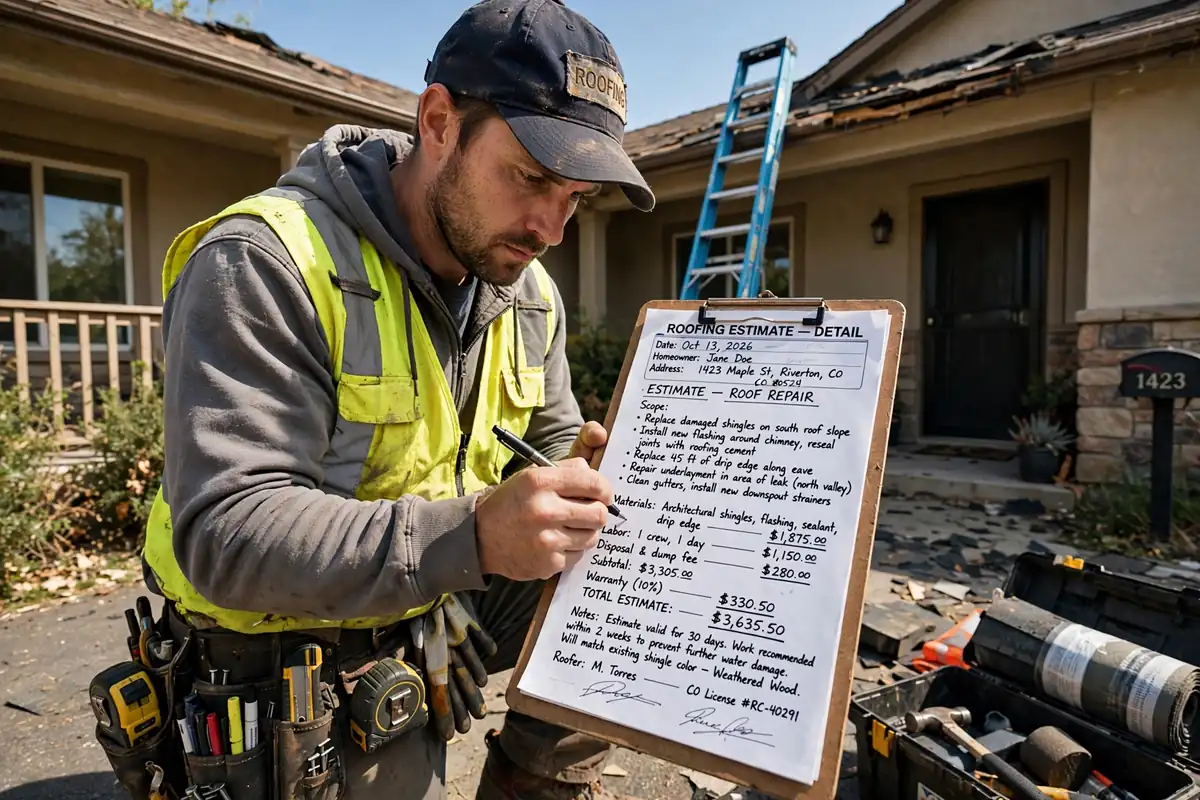
What drives the price
Four factors set 90 percent of the price: roof size (measured in squares, where one square is 100 sq ft), material choice (architectural shingles vs. metal vs. tile), the number of existing layers to tear off, and the condition of the decking underneath. Steep pitches, complex rooflines with dormers and valleys, and difficult access all add labor hours.
Typical cost ranges by material
For a 2,000 sq ft home in Brea: architectural asphalt shingles generally run $9,000-$15,000 installed; standing-seam metal $18,000-$35,000; concrete tile $20,000-$35,000. These are installed prices for a complete system — tear-off, underlayment, flashing, and ventilation — not material-only numbers.
The hidden costs to budget for
Redecking (replacing rotted sheathing) is the most common added cost, usually priced per sheet. Permit fees in CA add a few hundred dollars. And if your home has two or three old layers, the extra tear-off and disposal labor is real. A trustworthy estimate lists these as line items with unit prices, not vague allowances.
How to compare bids honestly
Get three written estimates and compare scopes, not just totals. The cheapest bid often omits ice-and-water shield, new flashing, or ventilation upgrades that the others include. Ask each contractor: is this a full tear-off? What underlayment? What flashing is replaced? What is the per-sheet redecking price?
Related Services
Areas We Serve
More Guides
7 Signs Your Brea Home Needs a Roof Replacement
Guide from Roof Replacement Specialists.
Roof Repair vs. Replacement: How Brea Homeowners Should Decide
Guide from Roof Replacement Specialists.
The line items behind every honest estimate
Tear-off and disposal. Decking allowance (per sheet, fixed unit price). Underlayment and ice-and-water membrane. Flashing — drip edge, valleys, penetrations, chimneys. Field material (shingles, tile, metal, membrane). Ridge/hip caps. Ventilation correction. Permit and inspections. Each is a real cost; an estimate that lumps them into one number is hiding where the money goes — and usually hiding what is being skipped.
Where Brea homeowners overpay without knowing
Three places. One: paying for a second layer 'to save money' — it voids warranties and hides deck damage, and the eventual tear-off costs more. Two: skipping the ventilation line item to shave the bid — it voids the manufacturer warranty and cooks the new roof. Three: choosing by lowest price without comparing scopes — the cheapest bid is missing something, and that something is always the expensive part to fix later.
Getting three bids without the headache
Get three written scopes, then compare them the same way: tear-off included? Underlayment brand and type? Flashing replaced or reused? Ventilation work itemized? Warranty terms in writing? The bids will stop looking like random numbers and start looking like different products — because they are. The right bid is the complete scope at a fair price, not the lowest number on the page.
Financing the project sensibly
Most Brea replacements are financed, and the sensible approach is the same as any major purchase: compare the total of payments, not just the monthly figure. Same-as-cash plans work well when the payoff date is realistic; longer terms cost more in total but keep monthly payments manageable. We walk through the options at the estimate with plain numbers — the financing decision should feel as clear as the roofing decision.
And one more practical point: photograph your roof's current condition today, even if you are not ready to replace it. Dated photos of the 'before' state make future insurance claims dramatically easier — adjusters and carriers move faster when the baseline is documented, and the photos cost you nothing to take.
Frequently Asked Questions
Does insurance cover roof replacement cost?
If the damage came from a covered event like wind or hail, your policy typically covers replacement minus your deductible. Age-related wear is not covered. We document storm damage to carrier standards when a claim is appropriate.
Can I finance a roof replacement?
Yes — most homeowners finance through home equity, contractor financing programs, or personal loans. Given that a roof protects everything beneath it, financing a needed replacement beats paying for interior water damage later.
Why do bids for the same roof vary so much?
Because the scopes vary. One bid includes full tear-off, redecking allowance, new flashing, and ventilation; another assumes a layover, reuses flashing, and ignores ventilation. Same roof, different jobs — the price difference is the scope difference. Itemized bids make it visible; lump-sum bids hide it.
Is the lowest bid ever the right choice?
Only if the scopes are identical — and they never are at the lowest price. In roofing, the low bid is low because something real was removed: tear-off labor, flashing, ventilation, insurance, or warranty. Ask what was removed and the mystery dissolves.
Is the cheapest bid ever the right choice?
Rarely, and only when the scopes are genuinely identical — same materials, same flashing, same ventilation, same warranty. In practice the cheapest bid is cheapest because something was left out. Ask the low bidder what they excluded to reach the number; the answer tells you everything.
Does a new roof increase home value?
Yes — consistently among the highest-ROI exterior improvements. Appraisers credit a new roof directly, buyers discount heavily for an aging one, and in Brea's market a roof with transferable warranties is a genuine listing advantage. It rarely returns 100% at sale, but it removes the single biggest buyer objection, which is worth more than the appraisal line.