
How Long Does a Roof Replacement Take in Brea?
Most single-family roof replacements in Brea take one to three days. Here is what determines where your project falls in that range — and what the day-by-day process looks like.
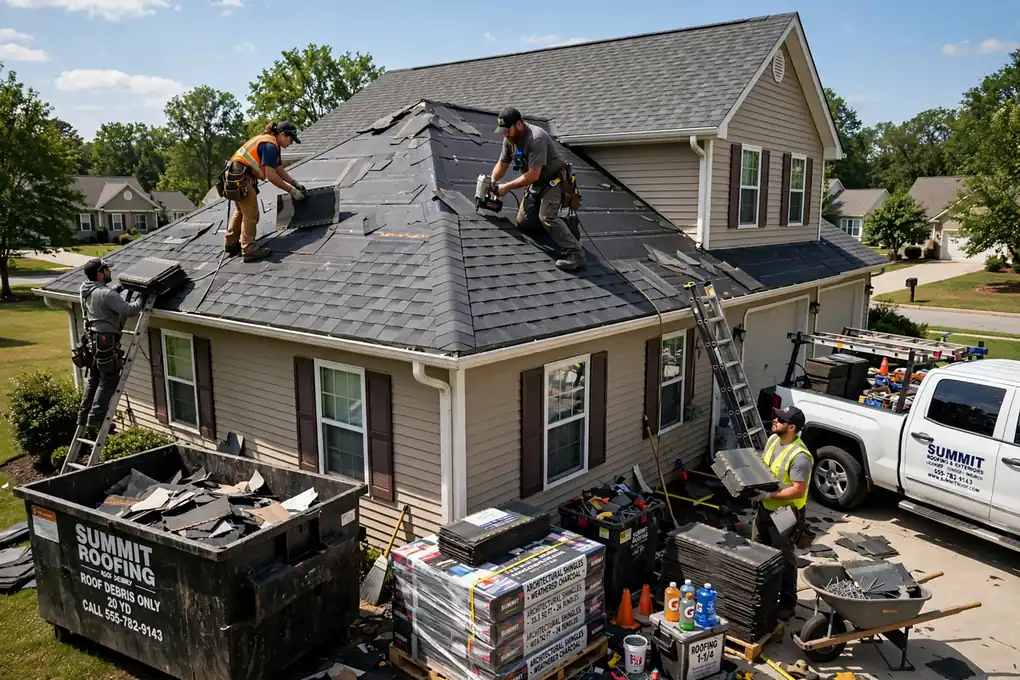
The short answer by home size
A straightforward 1,500-2,000 sq ft ranch: one to two days. A 2,500-3,500 sq ft two-story with dormers and valleys: two to three days. Large, steep, or complex roofs: three to five days. Tile and slate take longer than shingles — typically a week or more.
What can extend the timeline
Multiple tear-off layers, extensive redecking, structural repairs, custom flashing fabrication, HOA approval waits, and material lead times for specialty products. Weather is the wildcard — we never tear off more than we can make watertight the same day.
A typical two-day project, hour by hour
Day one: crew arrives early, protects landscaping, tears off old roofing, inspects and repairs decking, installs underlayment and dries in the roof. Day two: flashing, shingles or primary material, ridge caps, ventilation, cleanup, magnetic nail sweep, and final walkthrough with you.
How to keep your project on schedule
Clear driveway and side-yard access before crew arrival, keep pets and kids away from the work zone, and decide on material and color before the start date. Indecision on day one is the most common avoidable delay.
Related Services
Areas We Serve
More Guides
How Much Does Roof Replacement Cost in Brea?
Guide from Roof Replacement Specialists.
7 Signs Your Brea Home Needs a Roof Replacement
Guide from Roof Replacement Specialists.
What actually consumes the days
Tear-off and dry-in: day one for most homes. Decking repairs: hours, unless a full redeck adds a day. Underlayment, flashing, and field installation: the bulk of the schedule. Tile lift-and-relay: three to five days because every tile is handled twice. The variables that stretch timelines are deck surprises, HOA submittal timing on hillside projects, and weather holds — we communicate all three the moment they appear, not at the end of the day.
How to keep your project on the short end
Decide materials before installation week — change orders are the number-one schedule killer. Clear driveway and side-yard access the night before. Keep pets and kids away from the work zone (nails, noise, ladders). And answer your phone: the one approval we occasionally need mid-job (a redeck sheet count, a flashing detail) takes sixty seconds by text and saves hours of standing crew time.
The day-by-day rhythm
Day one is tear-off: loud, fast, and finished by afternoon with the new underlayment down. Days two and three are installation — steadier, quieter, the roof visibly taking shape. The final day is details: flashing, ridge caps, cleanup, and the walkthrough. Knowing the rhythm helps you plan: be out on day one if you work from home, and save the final walkthrough slot — that is your time to ask everything.
Why some roofs take a week
Size, complexity, and surprises: a 4,000-square-foot tile relay with a redeck takes a week; a 1,800-square-foot shingle reroof takes two days. Cut-up rooflines with dormers and valleys add detailing time; deck replacement adds a day; custom metal fabrication adds lead time before day one. The written timeline accounts for your roof's specifics — ask what would make yours longer, and you will hear an honest answer.
Frequently Asked Questions
Do I need to leave my home during the replacement?
No. Most homeowners stay. It is loud during tear-off — plan accordingly if you work from home — but the house remains fully livable.
What happens if it rains mid-project?
We watch forecasts obsessively and keep tarps and emergency dry-in materials on site. A roof under active replacement is dried in every evening, so overnight rain is a non-issue.
Do I need to be home during the installation?
No. Most homeowners are at work — we need driveway access and a phone number where we can reach you. We send photo updates through the day and call immediately if a decision is needed. The final walkthrough is the part worth being home for.
What happens if it rains mid-project?
The roof is dried in every night — that is the rule, not the hope. If weather turns during the day, the crew pivots to dry-in immediately: underlayment and temporary membrane go down before anyone leaves the roof. Emergency dry-in materials are on site from day one.
What happens if it rains mid-project?
We watch forecasts and never tear off more than we can dry in the same day. If unexpected rain arrives, the crew secures the roof with underlayment and tarps — every Brea replacement includes same-day dry-in discipline. Work pauses, protection holds, and installation resumes when the roof is dry.
Can weather add days to the timeline?
Yes — rain and Santa Ana winds pause work, and we build contingency days into every schedule rather than promising a date the forecast can break. The crew's rule is simple: never tear off more than can be dried in the same day, so a weather pause costs time, never damage.