
What Is the Best Season for Roof Replacement in Brea?
Every season has tradeoffs in Brea. Here is an honest month-by-month look at when to schedule your replacement — and when to avoid it.
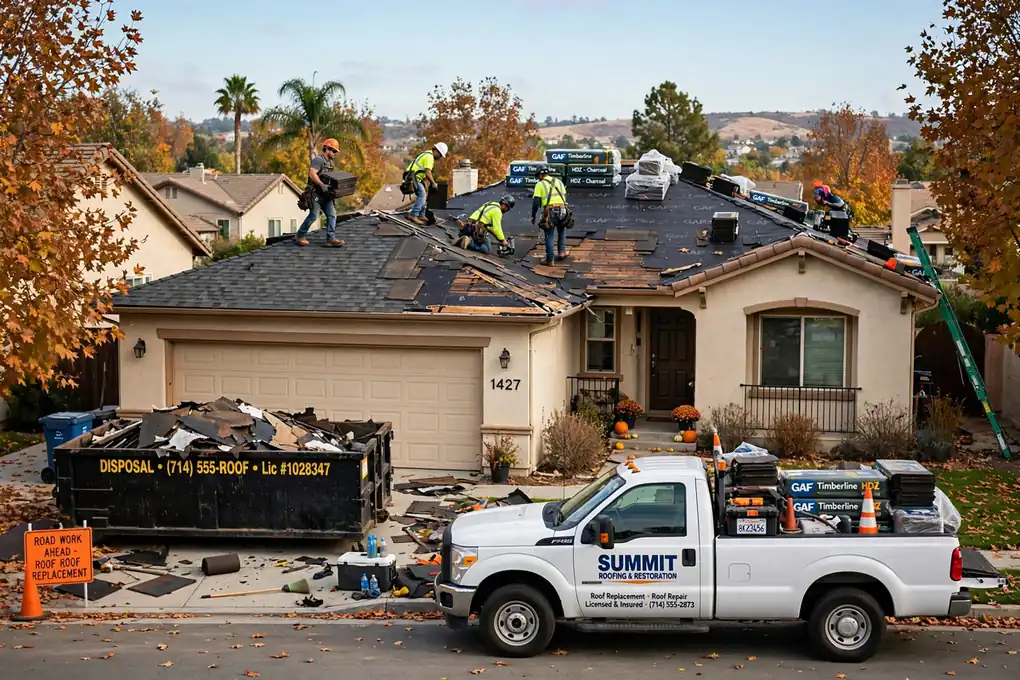
Spring and fall: the sweet spots
Mild temperatures, predictable weather, and shingles that seal quickly make spring and early fall the ideal windows in Brea. Crews work efficiently, materials behave well, and scheduling is straightforward.
Summer: hot but workable
Summer's long days mean fast projects, but Brea's heat demands early starts and careful material handling — shingles scuff more easily when baking. We schedule summer tear-offs for mornings and keep crews hydrated and shaded.
Winter: possible with planning
Winter replacements are entirely feasible here with the right planning: we watch forecasts closely, never tear off more than we can dry in daily, and use winter-grade installation practices. Off-season scheduling can also mean faster booking.
When timing matters most
Do not wait for the 'perfect' season if your roof is actively leaking — water damage costs dwarf any seasonal advantage. And if you are selling in spring, a winter replacement means listing with a brand-new roof.
Related Services
Areas We Serve
More Guides
How Much Does Roof Replacement Cost in Brea?
Guide from Roof Replacement Specialists.
7 Signs Your Brea Home Needs a Roof Replacement
Guide from Roof Replacement Specialists.
Brea's roofing calendar, month by month
October–November is the sweet spot: mild temperatures, seal strips bond well, and you beat the winter rains with a fresh system. December–March works fine — modern materials install year-round — but scheduling dances around rain windows. April–June is busy season with the best weather. July–September installs are hot for crews but fine for roofs; we start early and the materials love the heat for sealing. There is no bad month, only trade-offs.
Why fall beats spring in Brea
Two reasons. First, the Santa Ana wind season (October–January) tests every weak shingle — replacing in fall means the new roof meets its first wind event at full strength, not at year 20. Second, winter rains follow the winds; a fall replacement means the fresh flashing and valleys face their first real rain as a complete system. Spring replacements are excellent too, but they wait through a whole rainy season on the old roof first.
The Brea scheduling sweet spot
March through May is the sweet spot: mild temperatures, long daylight, installers fresh and available, and completion well before summer heat and well ahead of winter rains. September and October run a close second. If your roof is aging, scheduling the inspection in February for a spring install beats calling in July when everyone else's emergency is competing for the same crew.
Booking ahead of the season
The best-priced slot is the one you book before you need it. Roofing calendars fill six to eight weeks out in spring and fall — the homeowners who schedule inspections in January and February choose their dates; the homeowners who call in June take what is left. If your roof is on a timeline, the inspection this month buys you options next month.
One final note: the 'best' season is also the season everyone wants, so the real advantage goes to whoever books first. An inspection today reserves your place in the schedule; waiting until the ideal month often means waiting through it.
Frequently Asked Questions
Can shingles be installed in cold weather?
Yes, with proper techniques — hand-sealing, careful handling, and attention to thermal sealing. Manufacturers publish cold-weather guidelines and we follow them.
How far out should I book?
Two to four weeks is typical in normal seasons; storm seasons and peak spring can push to six. The inspection itself is worth booking early regardless.
Can you replace a roof in winter in Brea?
Yes. Brea winters are mild by roofing standards — seal strips bond, crews work efficiently, and we schedule around rain windows with emergency dry-in as the backstop. Winter's real advantage is availability: shorter lead times than spring.
Should I wait for a dry forecast?
We watch the forecast, not you. The rule is simple: we never tear off more than we can dry in the same day, and every project carries emergency dry-in materials on site. A surprise shower meets a prepared crew, not an exposed roof.
Do roofers work during Santa Ana wind events?
Not on the roof itself — high winds stop installation work for safety and because loose materials become hazards. We watch forecasts and build wind contingency days into fall schedules. Tear-off never starts when a wind event is forecast within 48 hours.
Is winter a bad time for roof replacement in Brea?
Not really — Brea's winters are mild, and winter installs avoid the summer heat that stresses crews and materials. The only winter constraint is rain days, which we build into the schedule. Some of our cleanest installs happen in December and January, with full crew attention and no backlog pressure.
What is the worst time to replace a roof in Brea?
There is no truly bad time, but mid-summer combines the year's highest heat (harder on crews and materials) with peak demand (longest waits). If your timeline is flexible, spring or fall buys you better scheduling and milder working conditions.